Content strategy has a reputation as a quarter of workshops ending in a forty-slide deck. It is one working afternoon. You need the questions that decide your deals, two scores, a two-by-two, and the discipline to ignore the most entertaining quadrant. Here is the afternoon, in order.
Hour one: inventory the prompts that decide deals
Collect twenty to forty real buyer questions. Not keywords, not themes: questions an actual person asks on the way to a decision. Pull them from sales call transcripts, lost-deal notes, onboarding sessions where a new customer admits what they wish they had known, and the prompts you already run against the engines. If the list reads like a keyword tool exported it, start over. If it reads like a skeptical VP of Engineering at eleven at night, keep going.
Aim for the whole arc of the deal. The early framing questions: do we build or buy, is this category worth adopting at all. The comparison questions: X versus Y for a company like ours. The late diligence questions: what migration from the incumbent actually takes. The early ones usually carry the most weight, but you want the full arc on the table before you score anything.
Then cluster. "Is X compliant with Y," "does X meet Y requirements," and "X for regulated industries" are one question wearing three outfits. Twenty to forty raw questions usually collapse into ten or fifteen clusters, and clusters are what you score.
Hour two: score each cluster twice
Two scores per cluster. High or low is plenty of precision.
Decision weight asks: does this question shape shortlists? Is it asked before the buyer decides who gets a call? Questions asked early, while the field is being narrowed, are worth multiples of questions asked late, when procurement is comparing line items. We laid out that dynamic in The Shortlist Is Written Before You Ever Get a Call; the short version is that most revenue is decided by questions you never hear asked.
Citability gap asks: is the current answer weak? Run each cluster's main question through the engines your buyers use and read what comes back. Hedged, generic, or citing a source that will not survive scrutiny: big gap. Specific, confident, citing an entrenched source, or already citing you: small gap. This takes about ninety seconds per cluster, and it is the ninety seconds most content plans skip.
Hour three: plot and decide
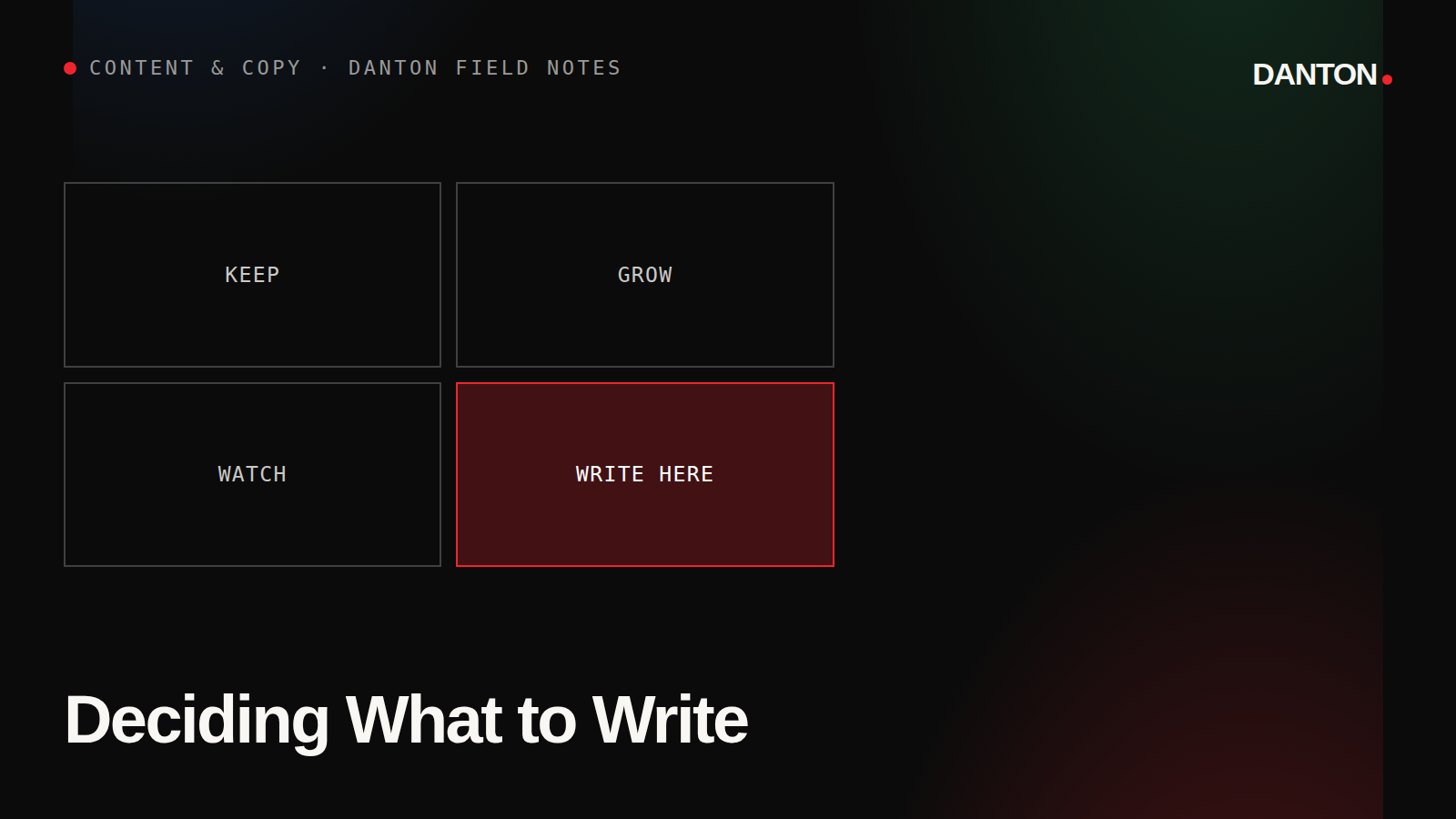
Draw the two-by-two, decision weight on one axis, citability gap on the other. Every cluster lands in a quadrant, and every quadrant gets a verdict.
- High weight, big gap: write now. This is the whole plan.
- High weight, small gap because you already win: maintain on a schedule. Refresh evidence, dates, and entity consistency, because engines re-verify and stale pages quietly lose their seat.
- Low weight, big gap: the vanity quadrant. Fascinating topics, wide open field, and no deal has ever turned on them. Ignore it no matter how fun it is; this quadrant is where content budgets go to feel productive.
- Low weight, small gap: not your fight. Close the tab.
Write where the decision weight is high and the incumbent answer is weak. Everything else is maintenance or restraint.
The cadence that follows
The two-by-two usually leaves five to eight clusters worth writing for, and some teams find that number uncomfortably small. It should feel uncomfortable in the other direction. One citable page per decisive prompt cluster, built deep: the plain claim, the evidence beside it, the entities named the same way everywhere. Fewer, deeper pieces beat volume, because an engine cites the best answer to a question, not the most recent forty attempts from one domain.
Twelve thin variants on one cluster do not buy you twelve chances. They hand the engines twelve reasons to find you interchangeable, and they hand your team a calendar that crowds out the deep work. Put the maintain list on a quarterly rotation with a named owner, the way you would patch dependencies: unglamorous, scheduled, cheaper than losing the seat. This is how we run content marketing engagements: a short list of pages that each own a question, maintained like production software rather than published like a feed.
The afternoon ends with a plan you can defend in one sentence: these eight questions decide our deals, the current answers are weak, we will write the answer that wins each one, and we will leave everything else alone.
Block the afternoon before the next planning cycle blocks it for you.